Imagine spending months planning a dream home renovation: picking out ambient lighting, shortlisting designer furniture, and matching wall palettes. Yet, within just six months of moving in, the living room floor starts losing its shine, grout line corners chip, and a spilled glass of red wine leaves a permanent mark.
It is a frustratingly common nightmare. The global vitrified tiles market is projected to cross $105 billion in 2026, according to comprehensive industry research by Grand View Research, with residential projects accounting for nearly 39% of end-use demand. Modern homeowners are stepping away from traditional, high-maintenance options like natural marble and soft ceramic in favor of engineered surfaces built to last a lifetime.
If you are looking to build or renovate your space without future maintenance headaches, understanding what is vitrified tiles technology is your absolute best starting point.
What is Vitrified Tiles Flooring?
To understand what is vitrified tiles, it helps to look at the manufacturing process. The word “vitrified” comes from the Latin vitreum, meaning “glass.”
Unlike traditional ceramic tiles made purely from pressed, low-density clay, vitrified tiles are created by fusing a refined mixture of:
- 40% Silica
- 30% Clay
- 20% Feldspar
- 10% Quartz
This raw material mix is compressed under massive hydraulic pressure and fired at extreme kiln temperatures ranging from 1200°C to 1250°C. During this vitrification process, the minerals melt together to form a dense, glass-like internal matrix.
This thermal process gives vitrified tiles an exceptionally low water absorption rate of less than 0.5%, resulting in a solid surface that resists heavy loads, moisture, and staining.
Ceramic vs. Vitrified vs. Marble: Quick Comparison
| Feature |
Ceramic Tiles |
Vitrified Tiles |
Natural Marble |
| Water Absorption |
High (3% to 10%) |
Very Low (< 0.5%) |
Moderate (Porous) |
| Durability |
Medium (Prone to chipping) |
Exceptional (Scratch/Stain resistant) |
High, but prone to etching |
| Maintenance |
Regular cleaning |
Minimal (Simple wipe down) |
Requires periodic polishing/sealing |
| Cost Range |
Budget-friendly |
Mid-range to Premium |
High initial & upkeep cost |
Primary Types of Vitrified Tiles
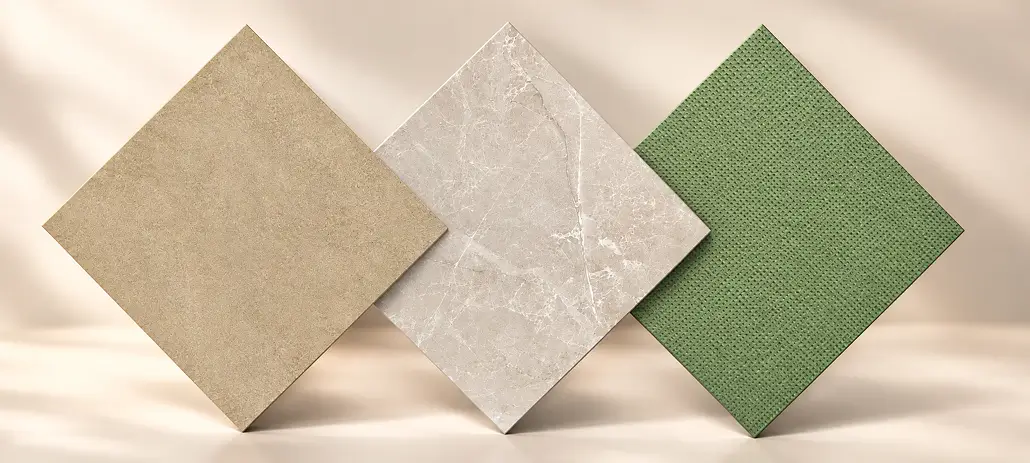
Depending on your aesthetic goals, foot traffic levels, and budget, you can choose from four main variations:
1. Double Charged Vitrified Tiles
Double charged tiles are manufactured by feeding two distinct layers of pigment into the press machine. The upper design layer is 3mm to 4mm thick, making the pattern extremely resistant to wear in high-traffic residential and commercial spaces.
2. Full Body Vitrified Tiles
In full body tiles, the pigment pigment extends uniformly through the entire thickness of the tile. Because the color is consistent top-to-bottom, any accidental chips or scratches remain virtually invisible, making them ideal for heavy commercial zones and staircases.
3. Glazed Vitrified Tiles (GVT) & Polished Glazed Vitrified Tiles (PGVT)
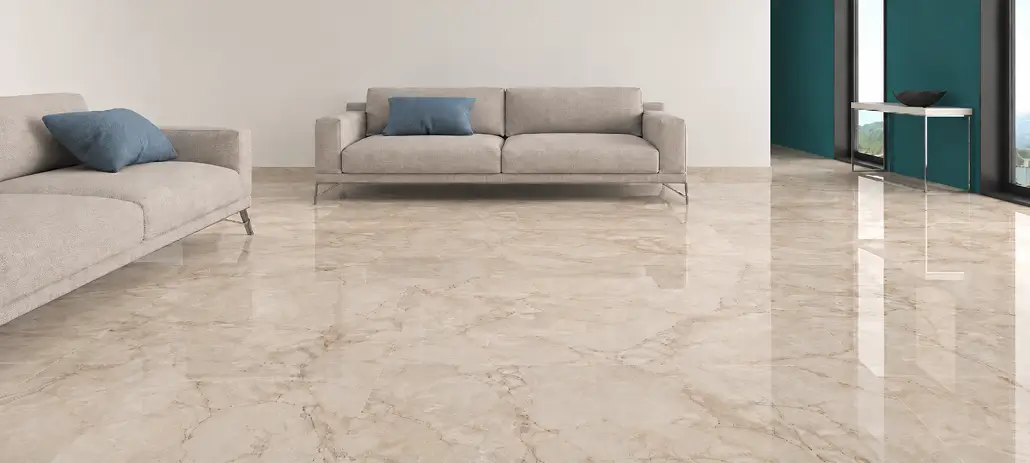
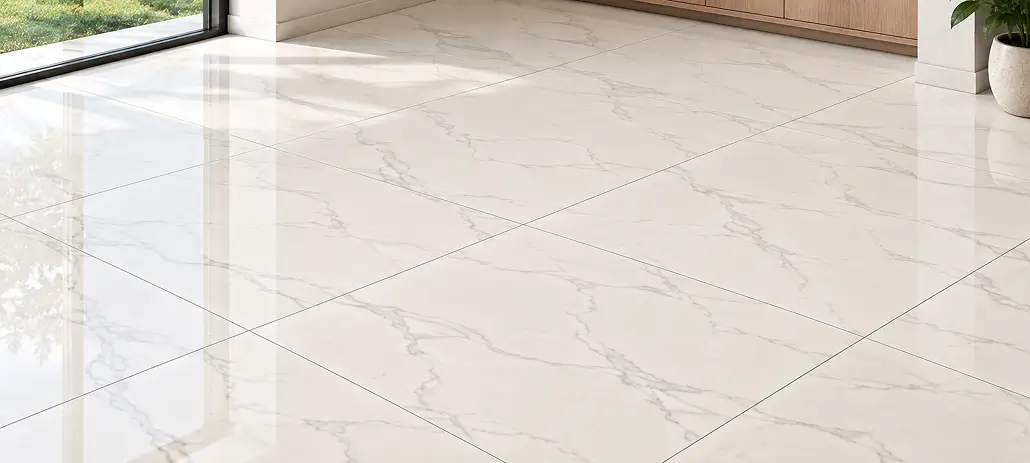
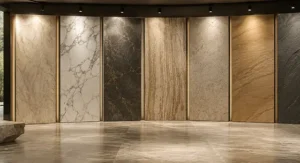
GVTs feature a high-definition digital inkjet print on top of the vitrified base, allowing realistic re-creations of wood, stone, and marble textures. GVT offers matte or textured finishes for slip resistance, while PGVT is polished to a high-gloss shine for luxury living areas.
4. Soluble Salt Vitrified Tiles
These entry-level tiles use liquid soluble salt dyes that penetrate the tile surface before firing. They provide subtle patterns at an economical price point, making them suitable for budget-conscious projects or rental properties.
5 Core Benefits of Vitrified Tiles
Understanding what is vitrified tiles advantage over traditional flooring comes down to five key features:
- Near-Zero Porosity: An absorption rate below 0.5% prevents water, grease, and inks from penetrating the surface, eliminating mold and permanent stains.
- Scratch & Abrasion Resistance: High surface hardness protects against scuffs from heavy furniture, high heels, and pets.
- Seamless Installation: Precision-cut rectified edges allow tight grout lines (1.5mm to 2mm) for a smooth, continuous floor appearance.
- UV & Color Stability: Sun exposure will not fade or alter tile colors, keeping indoor and outdoor installations looking new over time.
- Low Maintenance: Non-porous surfaces require only basic wiping with mild floor cleaners without needing sealers or re-polishing.
Room-by-Room Application Guide
Knowing what is vitrified tiles performance across different areas helps in choosing the right finish for every room:
- Living Rooms & Foyers: Large-format Polished Glazed Vitrified Tiles (PGVT) in 800×1600 mm or 1200×1800 mm reflect light and give the illusion of an expanded space.
- Kitchens: Double Charged or Glazed Matte Vitrified Tiles resist oil drops and offer slip grip during cooking spills.
- Bathrooms & Wet Areas: Anti-skid textured or matte vitrified tiles on floors minimize slips, while matching GVT wall slabs reduce grout lines where grime accumulates.
- Patios, Balconies & Driveways: Thick (12mm–20mm) Full Body Vitrified Tiles handle outdoor weather changes and vehicle loads reliably.
Buyer's Checklist: 5 Tips Before You Buy
Keep these functional guidelines in mind when making your selection:
- Check Edge Rectification: Look for laser-cut, sharp 90° edges to ensure tight, neat grout lines.
- Verify Batch/Shade Consistency: Ensure all purchased boxes share identical batch numbers to prevent subtle shade variations.
- Check Hardness Ratings: Select PEI wear ratings and Mohs hardness levels that match the expected foot traffic.
- Factor in Wastage: Buy 8% to 10% extra material to cover corner cuts, edge trims, and future repairs.
- Use Polymer Adhesives: Install tiles with modified tile adhesives instead of plain cement to ensure a permanent chemical bond without hollow spots.
Conclusion
Choosing the right flooring is a foundational decision that impacts your home’s aesthetics, maintenance routine, and property value for decades. Understanding what is vitrified tiles manufacturing and performance metrics allows you to select durable surfaces tailored to each room’s specific needs, from high-gloss living room floors to slip-resistant bathroom tiles.
Ready to transform your floors with durable, world-class designs? Visit the Chhabria Tiles showroom or browse our digital catalog today to book a free design consultation.
At Chhabria Tiles, we offer a curated collection of high-durability vitrified tiles designed to fit every design style and budget.