Have you ever finished mopping your floor only to notice dull patches, stubborn stains, or grout lines that still look dirty? It is a common frustration for homeowners. Floor tiles are designed to be durable and attractive, but without the right cleaning methods, they can gradually lose their shine and appeal.
The good news is that you do not always need expensive cleaning products to restore your floors. Some of the most effective solutions are already sitting in your kitchen cabinet.
If you have been searching for practical answers on how to clean floor tiles, these simple home remedies can help keep your flooring spotless, hygienic, and looking new for years.
Why Regular Tile Cleaning Matters
Floor tiles experience constant foot traffic, dust accumulation, food spills, pet hair, and exposure to moisture. Over time, these elements create a layer of grime that ordinary mopping may not completely remove.
According to a study published by the National Sanitation Foundation, household floors can contain thousands of bacteria per square inch, especially in kitchens and entryways. Regular cleaning not only improves appearance but also contributes to a healthier indoor environment.
Understanding how to clean floor tiles properly helps prevent discoloration, staining, and long-term damage while preserving the original finish.
Start With the Basics: Remove Loose Dirt First
Before using any cleaning solution, sweep or vacuum the floor thoroughly. Many homeowners skip this step and go straight to mopping. Unfortunately, dirt particles can act like sandpaper when mixed with water, causing gradual wear on the tile surface.
For example, if sand and dust are left on a polished tile floor and repeatedly dragged around during cleaning, tiny scratches may develop over time. A quick sweep removes these abrasive particles and prepares the surface for deeper cleaning.
Vinegar and Warm Water: A Trusted Home Remedy
One of the simplest solutions for how to clean floor tiles involves a mixture of white vinegar and warm water.
Mix:
- 1 cup white vinegar
- 4 liters warm water
Use a microfiber mop to clean the floor and allow it to air dry. Vinegar helps break down grease, soap residue, and mineral deposits while leaving tiles looking refreshed.
For example, homeowners often use this method in dining areas where food spills and sticky residues accumulate regularly.
However, avoid vinegar on natural stone surfaces such as marble or granite because the acidity may damage the finish.
Baking Soda for Stubborn Stains
Some stains require more than routine mopping. Baking soda works exceptionally well on tough marks caused by coffee, tea, mud, or food spills. Create a thick paste using baking soda and a small amount of water.
Apply the paste directly to the stained area and leave it for 10 to 15 minutes. Gently scrub using a soft brush before rinsing with clean water.
A family with children, for example, may find crayon marks or juice stains on kitchen tiles. Baking soda often removes these marks without the need for harsh chemicals.
This method is particularly useful when learning how to clean floor tiles naturally and safely.
Lemon Juice for Freshness and Shine
Lemon contains natural cleaning properties that help remove mild stains while leaving behind a pleasant fragrance.
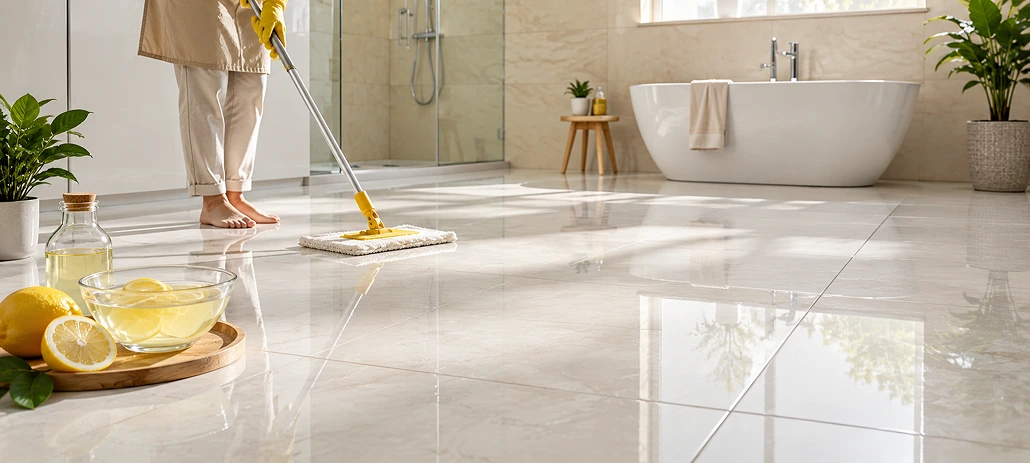
Mix fresh lemon juice with warm water and use it as a light cleaning solution for ceramic or vitrified tiles.
This remedy works especially well in bathrooms where soap residue can leave surfaces looking dull.
In addition to cleaning, lemon helps reduce unpleasant odors that may develop in moisture-prone spaces.
The Secret to Cleaner Grout Lines
Even when tiles look spotless, dirty grout can make the entire floor appear neglected.
Grout is porous and tends to trap dirt, moisture, and bacteria. Industry reports suggest that nearly 60% of visible floor discoloration complaints are actually caused by dirty grout rather than dirty tiles.
A simple home solution involves combining:
- Baking soda
- Hydrogen peroxide
A few drops of dish soap
Apply the mixture to grout lines and scrub gently using an old toothbrush. For example, bathroom floors often develop dark grout lines because of constant moisture exposure. This cleaning method can noticeably brighten grout and improve the overall appearance of the floor.
Dish Soap for Everyday Cleaning
Sometimes the simplest solution is also the most effective. A few drops of mild dish soap mixed with warm water can remove grease, footprints, and everyday dirt without leaving residue behind.
This approach works particularly well in kitchens where cooking oils can settle on floor surfaces.
Avoid using excessive soap because it may create a film that attracts more dirt over time. For homeowners wondering how to clean floor tiles regularly without damaging the finish, mild dish soap remains one of the safest options.
Steam Cleaning for Deep Cleaning
For households with pets or heavy foot traffic, steam cleaning offers a powerful chemical-free solution.
Steam penetrates grout lines and textured surfaces while helping eliminate bacteria and allergens.
Many modern tile manufacturers approve steam cleaning for ceramic and porcelain tiles, although it is always advisable to check product recommendations first.
For example, a busy family home with pets may benefit from monthly steam cleaning sessions to maintain hygiene and appearance.
Common Cleaning Mistakes to Avoid
Many people unintentionally damage their flooring while trying to clean it. Avoid these common mistakes:
- Using steel wool or abrasive scrubbers
- Applying highly acidic chemicals repeatedly
- Leaving standing water on floors
- Using bleach excessively
- Ignoring grout maintenance
For instance, harsh scrubbing pads may remove stubborn stains quickly but can permanently scratch glossy tile surfaces. Gentle cleaning methods often deliver better long-term results.
How Often Should You Clean Floor Tiles?
Cleaning frequency depends on usage. Entryways, kitchens, and living rooms generally require weekly mopping because they experience more traffic. Bathrooms may benefit from more frequent cleaning due to moisture exposure.
As a general guideline:
- Sweep or vacuum 2–3 times weekly
- Mop once every week
- Deep clean grout every few months
Following a consistent schedule prevents dirt buildup and reduces the effort needed during major cleaning sessions.
Maintaining the Shine of Modern Tiles
Many modern vitrified and porcelain tiles are designed to retain their appearance for years. However, proper maintenance is still essential.
Use microfiber mops whenever possible because they capture dirt more effectively than traditional cotton mops.
Place doormats near entrances to reduce dust and debris entering the home. Clean spills immediately before they have a chance to stain grout or leave residue. These simple habits make a significant difference in preserving the appearance of your flooring.
When homeowners ask how to clean floor tiles effectively, maintenance habits are often just as important as the cleaning products themselves.
Choosing the Right Tiles Makes Cleaning Easier
Not all tiles require the same level of maintenance. High-quality vitrified and porcelain tiles are designed to resist staining, moisture absorption, and wear. Their dense surface structure makes everyday cleaning easier and more efficient.
For example, premium glazed tiles typically require less maintenance than older porous flooring materials, making them a practical choice for busy households. Selecting quality tiles from the beginning can save time, effort, and cleaning costs in the future.
Conclusion
Learning how to clean floor tiles does not have to involve expensive products or complicated techniques. Simple remedies can effectively remove dirt, stains, and grime while helping maintain the beauty of your floors. Regular cleaning, proper grout care, and preventive maintenance ensure that your tiles continue looking attractive for years.
If you are considering upgrading your flooring or exploring premium tile collections, visit Chabbria Tiles. Our extensive range of stylish, durable, and easy-to-maintain tiles is designed to suit modern homes and commercial spaces alike.
Visit our tiles showroom in Bangalore and find flooring solutions that combine elegance, performance, and long-lasting value.