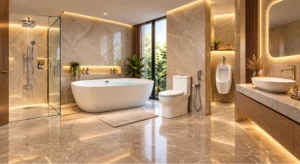
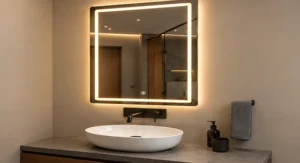
Sanitaryware Items List for a Modern Bathroom
A bathroom can look beautiful in pictures but still feel uncomfortable when you use it every day. A toilet that...
Read More →

SHARE THIS


A pool can be the highlight of a home, but the area around it can quickly become a safety concern. Wet feet, splashing water, direct sunlight and regular exposure to pool chemicals can make the wrong flooring slippery, faded or difficult to maintain.
This is why choosing poolside tiles is not only about colour and appearance. The surface needs to provide reliable grip while standing up to outdoor conditions.
The World Health Organization estimates that around 300,000 people die from drowning every year worldwide, with children particularly vulnerable. While tiles alone cannot prevent drowning, a carefully designed pool surround can reduce slip-related risks and make the area more practical for everyday use.
So, what are the best tiles for around a pool? The answer depends on slip resistance, water absorption, durability, heat, maintenance, and the overall design of your outdoor space.
Poolside flooring has to deal with conditions that ordinary indoor flooring does not. Water is present almost constantly, and the surface may become wet within seconds when swimmers get out of the pool.
A good pool tile should have a textured or matt surface rather than a highly polished finish. It should also have low water absorption and enough resistance to everyday outdoor wear.
Slip resistance deserves particular attention. Outdoor tile products commonly use R-ratings to indicate slip resistance. R11-rated porcelain, for example, is widely used for outdoor areas where additional grip is required. Some outdoor pool surrounds may benefit from even higher slip resistance, depending on the design and installation conditions.
You should also consider how hot the tile becomes in direct Indian sunlight. A very dark surface may absorb more heat and become uncomfortable under bare feet. Lighter shades such as beige, ivory, light grey and sandstone-inspired finishes can create a cooler-looking and more comfortable pool environment.
The toilet is usually the most important sanitaryware to purchase. Modern bathrooms commonly use wall-hung, back-to-wall, or floor-mounted water closets.
A wall-hung toilet creates a clean, contemporary appearance because the cistern and plumbing can be concealed. It also makes floor cleaning easier. A floor-mounted WC can be a more straightforward choice when you want simpler installation, or when the existing plumbing does not support a concealed system.
Pay attention to the trap type, seat height, bowl shape, and flushing performance. Also check the available space before purchasing. A large toilet may look impressive in a showroom but feel cramped in a compact bathroom.
Water consumption is another important consideration. BIS documents for flushing cisterns include reduced and full flush configurations such as 6/3 liters, 4.8/2.8 liters, and 4/2 liters. This gives homeowners practical options when choosing water-efficient flushing systems.
Natural stone can give a pool area a warm and sophisticated appearance. Sandstone, slate, limestone and similar stones can create an outdoor setting that feels more connected to the garden.
However, natural stone requires more consideration than porcelain. Some stones are porous and may need sealing to protect them from moisture, stains and pool chemicals. The surface also needs to provide sufficient grip when wet.
If you choose natural stone, check the specific stone’s porosity, finish and maintenance requirements rather than choosing it based only on appearance.
A honed or textured finish is generally more suitable for a pool surround than a highly polished finish. The right surface can help balance the natural beauty of the stone with practical everyday use.
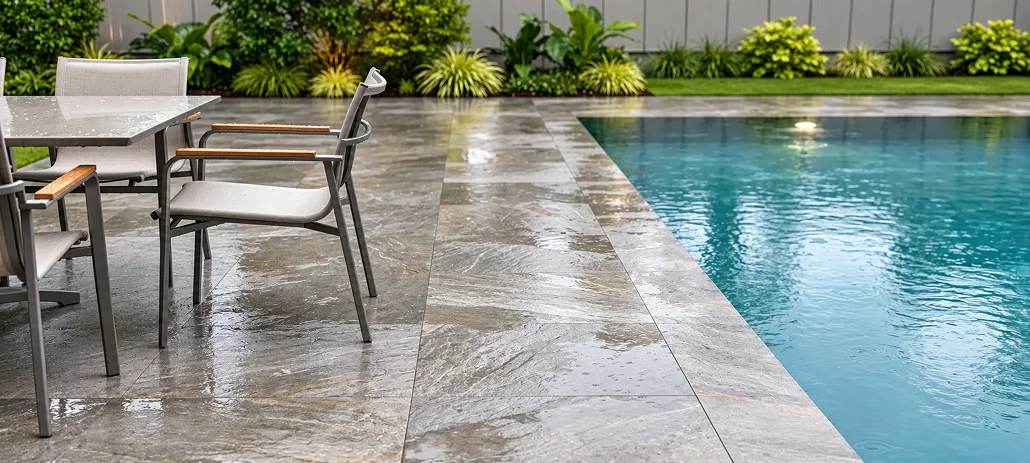
A pool surround should never feel like a smooth indoor floor. Water, sunscreen and wet feet can create a slippery surface, particularly around busy family pools.
Textured tiles provide additional surface grip. They can have subtle raised patterns, structured finishes or natural stone-inspired textures. The important point is to select a product with verified slip-resistance performance rather than assuming that every matt tile is automatically safe.
For instance, an R9 tile may be suitable for certain dry indoor applications, but it is not automatically the right choice for a permanently wet outdoor environment. Product specifications should be checked before installation.
If children regularly use the pool, safety becomes even more important. Children may run, jump or walk quickly around the pool without paying attention to a wet surface.
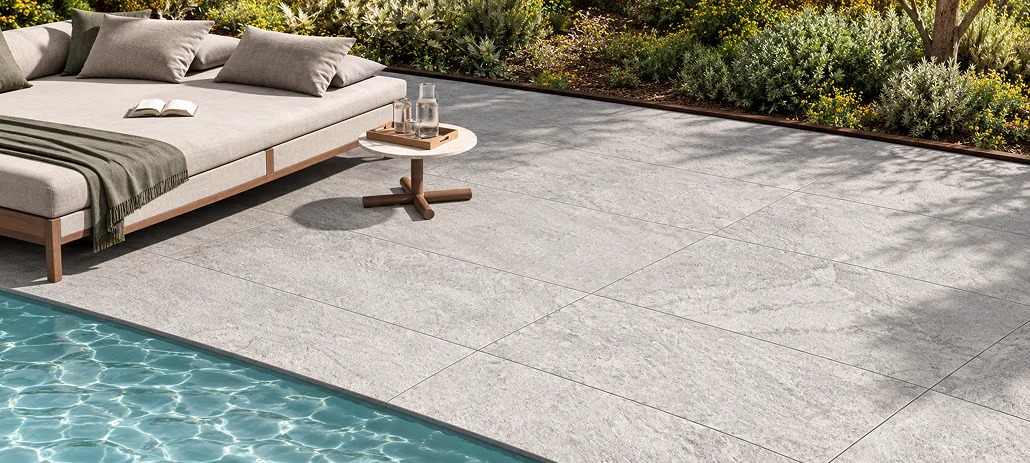
Anti-slip porcelain can provide a useful balance between safety, durability and appearance. Modern options do not have to look industrial. You can find stone-effect, concrete-effect and neutral porcelain finishes that suit both contemporary and traditional homes.
The CDC notes that drowning can happen within seconds and recommends close supervision of children around water. This highlights an important point: safe pool design involves several measures, including supervision, barriers and appropriate surfaces. Tile selection is one part of that wider safety approach.
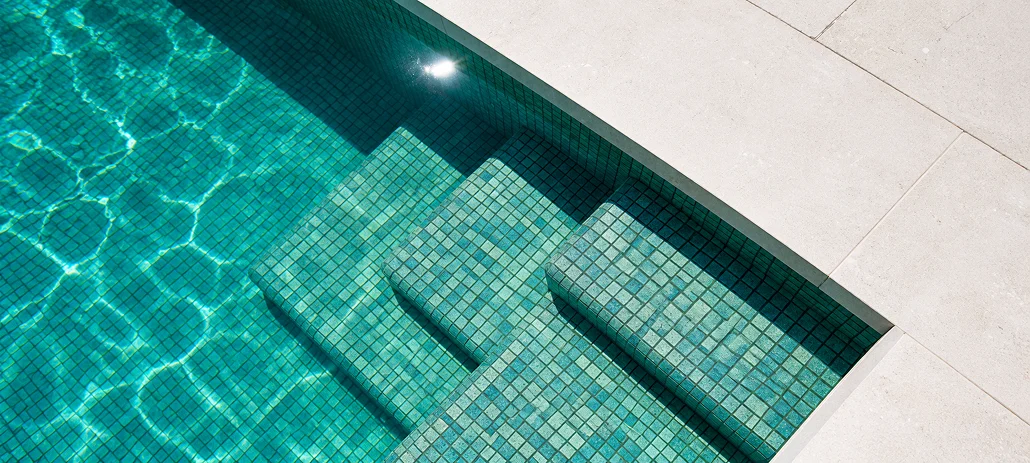
Mosaic tiles are often associated with the inside of swimming pools, but they can also work beautifully for selected poolside details.
Small-format tiles are useful around curved edges, steps and decorative borders because they can follow different shapes more easily than large tiles. They can also create visual contrast between the pool water and the surrounding deck.
However, mosaics are not automatically suitable for the walking area. Choose products designed for floor use and check their slip-resistance characteristics. A glossy decorative mosaic may look beautiful on a vertical feature but may not be appropriate where people walk with wet feet.
Colour affects more than the appearance of your pool.
Very dark tiles can make dust, water marks and mineral deposits more noticeable. They may also become uncomfortable in strong sunlight. Very bright white tiles can create glare and make dirt more visible.
Neutral shades often provide a practical middle ground. Beige, cream, taupe, light grey and natural stone shades can complement greenery while keeping the pool area visually open.
For example, light beige porcelain with subtle stone variation can work well around a tropical garden pool. For a modern villa, large-format light grey porcelain can create a clean and contemporary appearance.
Even the best tile will not perform properly if the surrounding surface does not drain water effectively.
Poolside flooring should be planned so that water does not remain in puddles around the deck. The installation should include suitable falls towards drainage points, while grout joints and movement joints should also be planned properly.
This matters because constant standing water can make the surface dirtier and increase the chance of algae or other deposits developing.
The tile itself is only one part of the system. The substrate, adhesive, grout, drainage and installation method all influence long-term performance.
Poolside tiles experience more than occasional foot traffic. They face wet feet, outdoor dirt, furniture, cleaning, sunlight and temperature changes.
Porcelain is particularly useful because its low water absorption makes it suitable for demanding wet and outdoor applications. Porcelain products are commonly classified as impervious when their water absorption is below 0.5%.
Durability also depends on the thickness and installation method. For example, 20mm outdoor porcelain slabs are available for external applications and can offer greater structural strength than standard indoor tiles.
This does not mean that thicker is always better. The tile must match the installation system and the surface underneath it.
A pool deck should not require hours of cleaning every week.
Choose tiles with a surface that can be cleaned easily using products recommended by the manufacturer. Textured tiles provide grip, but extremely deep textures can sometimes hold dirt and require more cleaning.
Porcelain is generally a convenient option because it does not require the same routine sealing associated with some natural stones. However, grout still needs proper care, especially in areas exposed to water, dirt and organic matter.
It is also worth cleaning leaves, dust and other debris regularly. This keeps the pool area looking better and helps maintain a cleaner walking surface.
Choosing pool tiles based only on appearance is one of the biggest mistakes homeowners make. A tile can look beautiful in a showroom but behave very differently when exposed to water and sunlight.
Avoid using polished tiles around the pool simply because they create a luxurious appearance. Also avoid standard indoor tiles for outdoor pool surrounds unless the manufacturer specifically confirms that they are suitable.
Do not ignore technical specifications. Check:
These details can save you from expensive replacement work later.
The best option is usually a high-quality, low-absorption porcelain tile with a matt or textured finish and suitable slip resistance for wet outdoor conditions. Natural stone can also work well when you select the right stone, finish and maintenance system.
Think beyond the first impression. Your poolside tiles need to look good on day one and continue performing after years of splashing, sunlight, cleaning and regular use.
The right combination of safety, durability, drainage, colour and installation will give you a pool area that feels comfortable, looks attractive and remains practical for everyday life.
Your pool deserves flooring that looks beautiful without compromising on everyday practicality. Chhabria Tiles offers a wide range of tile solutions to help you create an outdoor space that suits your home’s architecture, lifestyle and design preferences.
Explore suitable porcelain, stone-effect and outdoor tile options with the right specifications for your poolside project. Speak with the Chhabria Tiles team to compare finishes, sizes and designs before making your final choice.
Porcelain tiles with a suitable anti-slip rating, low water absorption and a matt or textured finish are among the most practical choices.
Polished tiles are generally not the preferred choice for wet walking areas because their smooth surface can become slippery when wet.
Porcelain is usually easier to maintain and offers low water absorption. Natural stone provides a more organic appearance but may require sealing and regular maintenance.
Light and medium neutral shades such as beige, cream, taupe and light grey are popular because they complement outdoor settings and can be more comfortable visually in strong sunlight.
Not necessarily. Always check whether the tile is specifically suitable for outdoor use, wet conditions, temperature changes and the proposed installation method.